"Lotteries are a tax on stupidity" - Voltaire
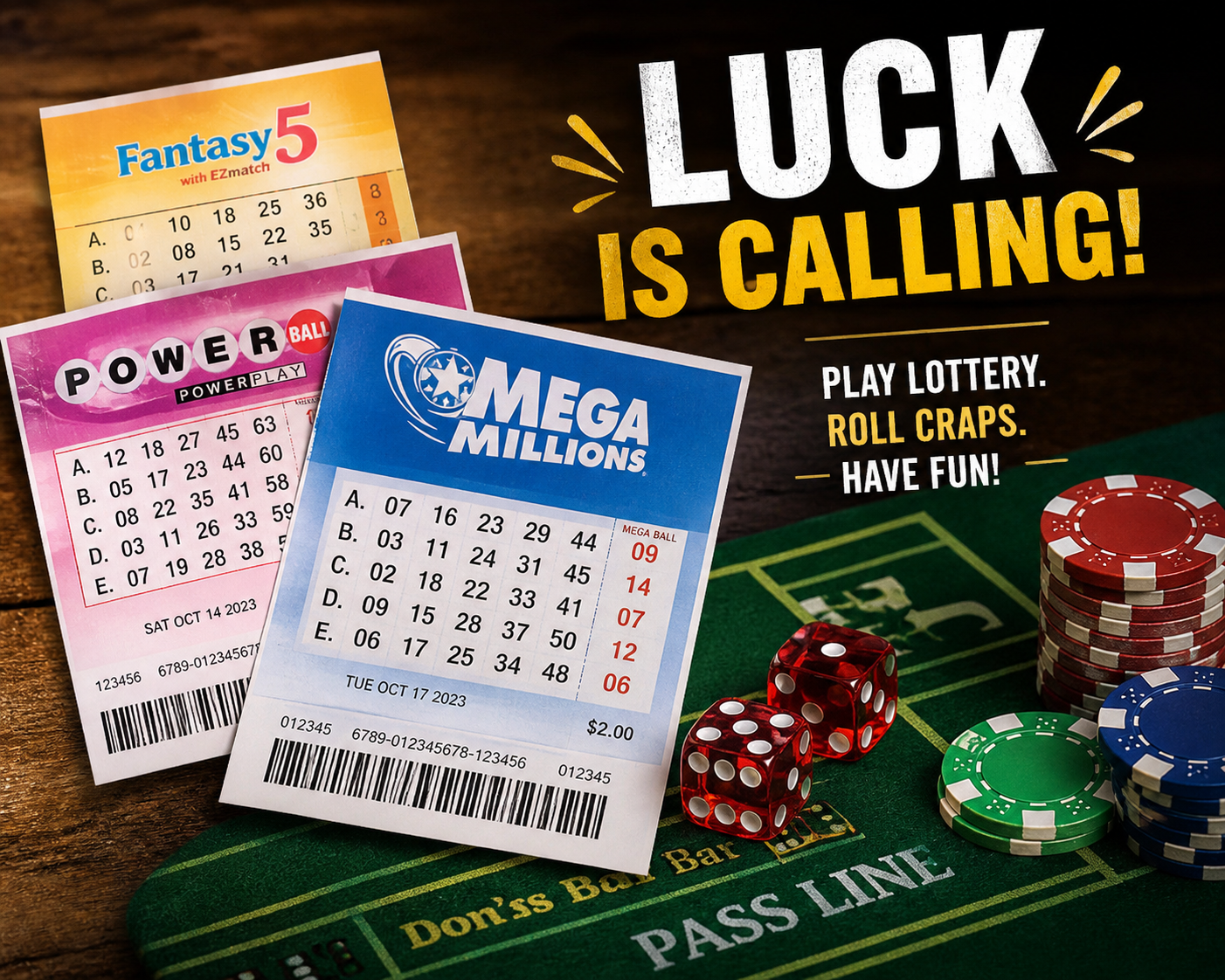
The common refrain is that gambling is a one-way ticket to ruin. While it's true that the house always has an edge, dismissing casinos as mere "money pits" misses a fascinating psychological and mathematical landscape.
If we look past the flashing lights, we find that gambling—specifically the divide between luck-based and strategy-based games—offers a masterclass in risk management and life choices.
The Allure of the "Sucker Bet"
Why do people flock to the lottery or slot machines when the odds are mathematically dismal? It comes down to two factors: high volatility and low cognitive load.
Slots and lotteries offer the dream of "small bet, massive gain." They require zero strategy, zero learning, and zero effort. You pay for the dopamine hit of "what if?" while the machine slowly bleeds your reserves. In life and investing, these are "low-friction" traps—opportunities that require no expertise but promise the world. Usually, you're just paying a tax on a dream.
The Craps Lesson: Understanding the Math
Contrast that with Craps. To a novice, the table is a chaotic mess of numbers and jargon. But Craps is actually a game of pure mathematical transparency. The odds of any number rolling are fixed by the physics of two six-sided dice.
The most seasoned players flock to Craps because of the "True Odds." When you take odds on a "Come" bet, the house edge drops to zero. The casino pays you out at the exact mathematical probability of the event occurring.
So, why isn't the Craps table as crowded as the slot floor? Because it's hard. It requires:
- Understanding complex rules and phases.
- Managing high cognitive load under pressure.
- The discipline to ignore "sucker bets" on the layout to stick to the math.
Life & Investing: Luck vs. Strategy
The divide between the slot machine and the Craps table is the same divide between gambling and intelligent investing. Here are the core lessons:
- Investment without Understanding is Just a Slot Machine: If you put money into an asset (like a trendy meme stock) without understanding the underlying risks, payouts, or "house edge," you aren't investing. You are pulling a lever and hoping for a miracle.
- Complexity is a Barrier to Entry (and a Filter for Success): Most people avoid complex systems because they require effort. In life, the best "odds" are often found in areas with a high learning curve. If it's easy to do, the house edge is likely stacked against you.
- High Volatility is Seldom a Strategy: Chasing "moonshots" with small amounts of capital feels harmless, but it fosters a mindset of luck over logic. Sustainable growth comes from "true odds" bets where you have a clear, mathematical understanding of your advantage.
The Bottom Line
Gambling is bad when it's an escape from reality based on blind luck. However, the mechanics of gambling teach us that success belongs to those who do the math, embrace the complexity, and refuse to play games where the odds are hidden.
Comments (0)
Be the first to leave a comment!
Leave a Comment
No login required.